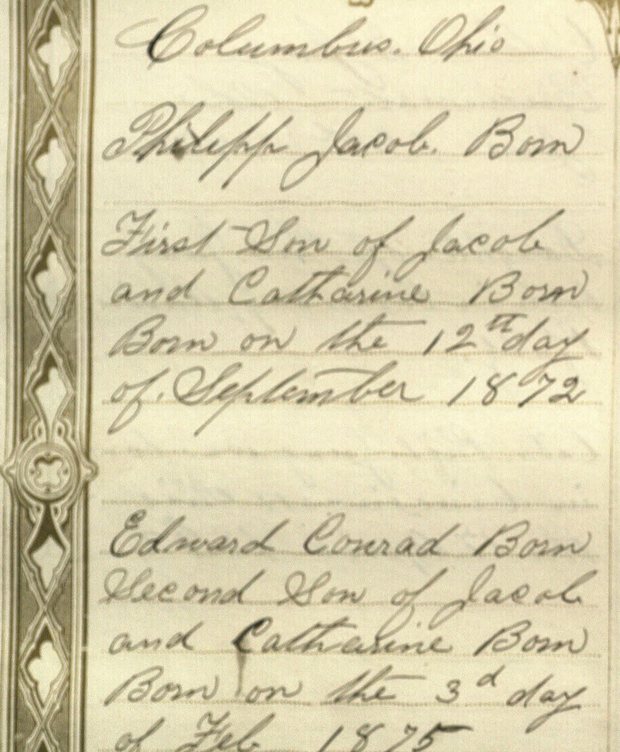
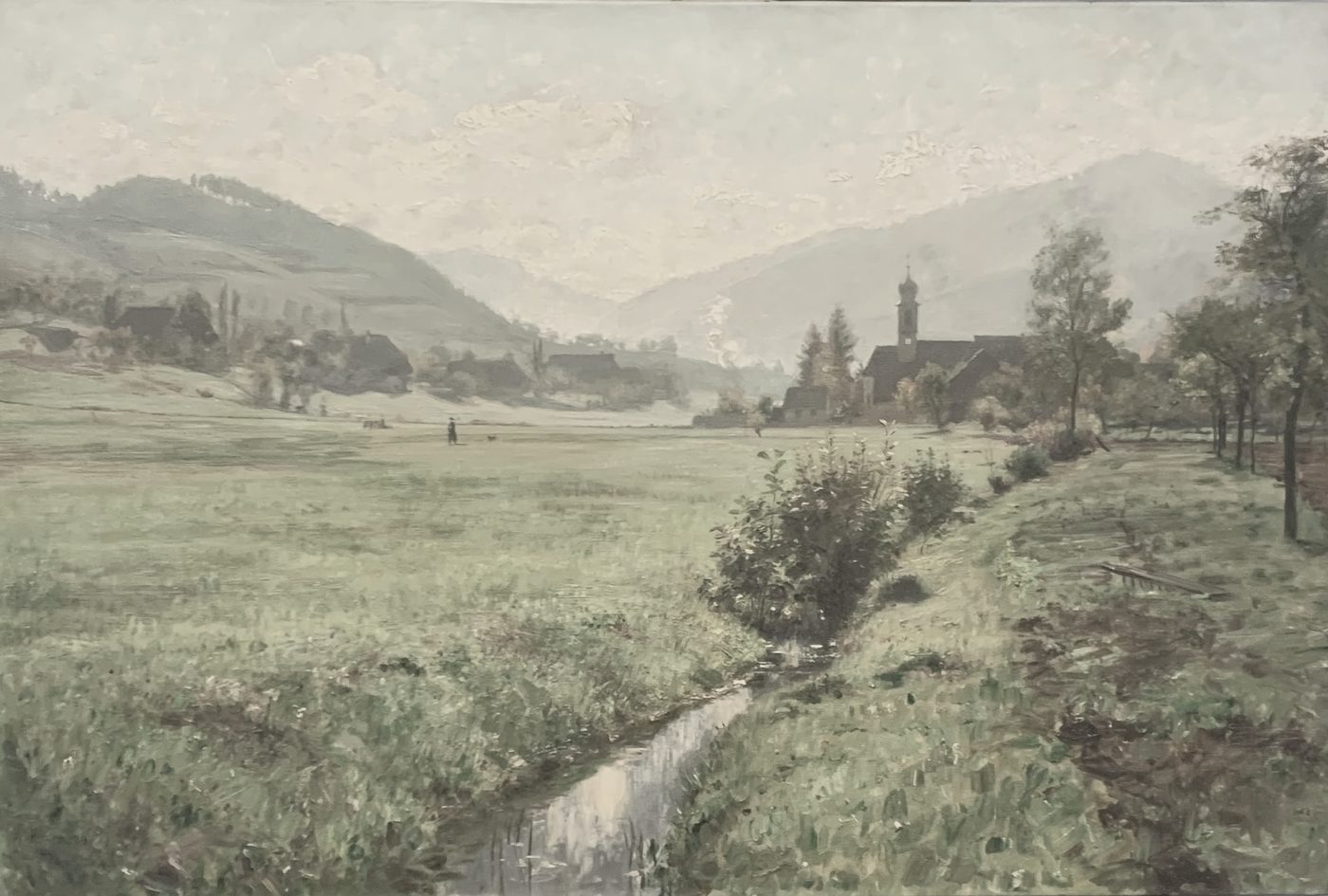
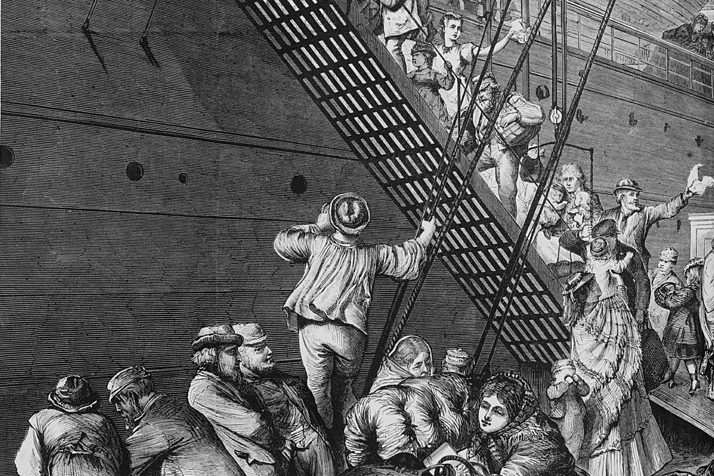
Your records say “Germany.” Let’s find the village.
We work from the original church and civil records in Germany, old German script included – and take you from “Germany” or “Prussia” to the exact place your family came from. A fixed price per goal, every source shown.
Free and without obligation. A personal reply within 3 working days.
What we read
No.
Baptized
Child
Father
7
19 Mar 1848
Heinrich
Joh. Biebighäuser
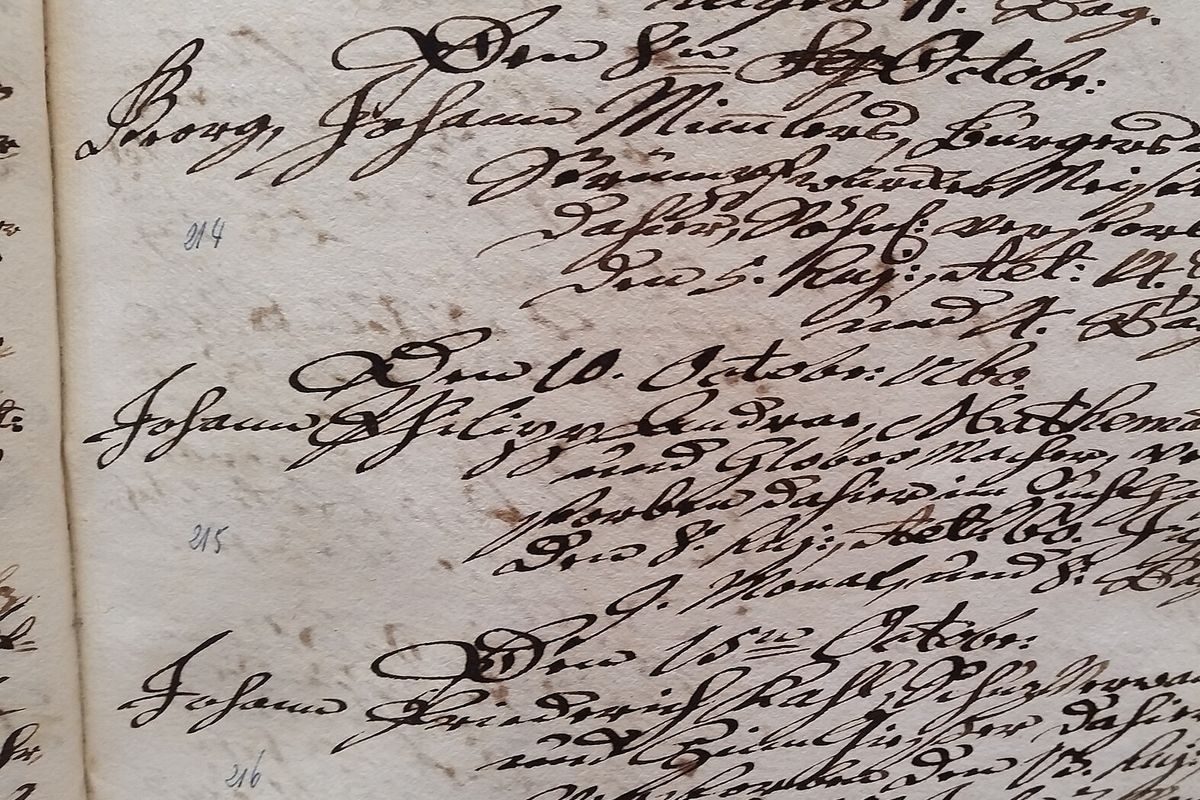
das erste Kind der zweiten Ehe, welcher am neunzehnten März getauft wurde und den Namen Heinrich erhielt. – the first child of the second marriage, who was baptized on 19 March and received the name Heinrich.
Move the glass over the writing. Dodenau baptisms, 1848 No. 7, set in the old hand.
2Sound familiar?
Years of searching. Then the tree just stops.
I’ve been running into a brick wall with this ancestor for years.
No record identifies the specific place of birth in Germany – just the useless answer “Germany” or “Prussia.”
I check every few months, and this has been going on for ten years.
I have difficulty reading the German or Latin in the old records. Every other letter seems to be the recorder’s personal opinion.
They took the $3,000, made me wait six months and found no additional ancestors.
Both are now deceased, so we can’t ask anymore.
From genealogy forums – not our clients.
Your ancestor didn’t vanish. The trail just continues in German.
Germans were careful record-keepers. Somewhere there is a parish register with your ancestor’s baptism in it, often with parents, godparents and the farm or trade they came from. The problem is getting to it: German records are kept by place, so without the village there is no way in. And once you have it, the entries are handwritten in an old script, sometimes in Latin.
That is exactly the part we take on, from here in Germany.
The parish, the church where they were baptized, the families they married into – backed by the original entry. A place you can visit.
Read for you, explained in English
Old German handwriting, Latin, faded ink: every record transcribed, translated and explained in plain English. You see what the pastor wrote, not just our summary.
A fixed price, not an hour package
Each step has a clear goal and a fixed price. If we can’t prove the village, you get your money back – all but $49. No “$3,000 and nothing found.”
What your records say
NameHenry Biebighauser
Born10 March 1848
Place of birthHessen Darmstadt
→
What we found
Dodenau, Grand Duchy of Hesse
Baptized 19 March 1848, son of Johannes Biebighäuser, smith.
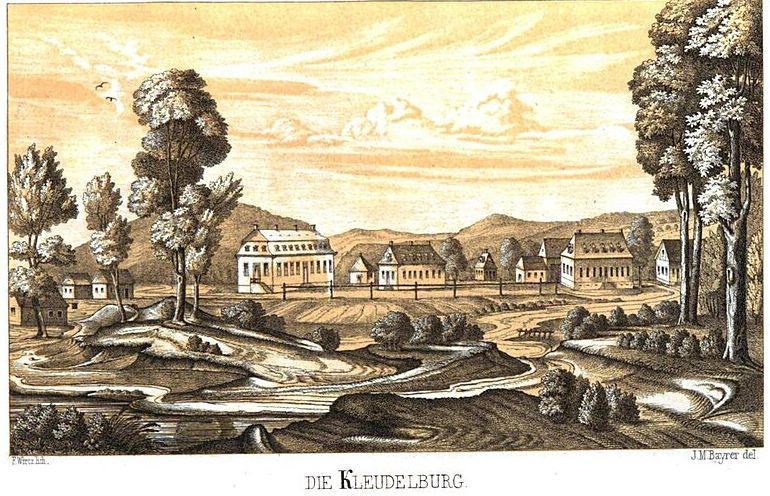
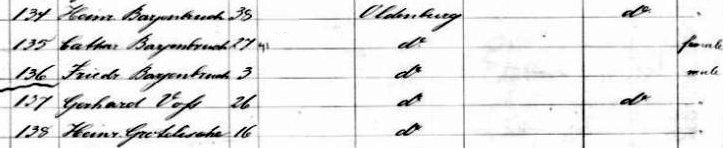
Heimwyn is a new research service based in southwest Germany. We are opening with a small group of founding clients, and we research all of Germany. Not every region’s records have survived equally well or are equally easy to reach, so your case review tells you honestly what that means for your family. We have no reviews to show you yet, so we show our work instead: two cases told step by step (Hessen, Oldenburg), and the documents a client receives – the case review and the report.
4How it works
Three steps from “Germany” to the village
Tell us about your brick wall
Answer a few questions below and send them to us. We reply personally within 3 working days.
Start with the village – go further only if you want to
First a free case review. Most families need only the first step: the village. If you want more afterwards, you can go on – every step priced before it starts, every step ending in a written report.
Founding price: Village Check $195 for our first clients
First
Free Case Review
We read everything you send us
An honest view: does your case look solvable, and where are the gaps?
What we would do first, and the fixed price for it
It commits you to nothing.
Freereply within 3 working days
Step 1
Village Check
Goal: the village your ancestor came from, proven by an original record
The entry – usually the baptism – transcribed word for word and translated
His parents, as the entry names them, with the archive reference
Offered when the case review says your case looks solvable – then money back, minus $49, if we can’t prove the village.
$249founding price $195 for our first clients · usually within 2 weeks
Step 2
Family in the Village
Brothers and sisters, half-siblings, the household through the years
The farm or trade, and what the village was like at the time
Every entry transcribed, translated and explained
Book it within 60 days and what you paid for the Village Check is credited.
$590Village Check credited if booked within 60 days
Step 3
Back Through the Generations
One line, father to father (or mother to mother), often back to the 1600s
Two records for every generation, the wives and where they came from, a map and a tree
An interim report along the way
How far back is realistic, and the fixed price, are set after the case review.
from $1,250per family line · fixed price after the case review
Extras on request
A designed family chronicle in English, printed and bound – as a gift
A short film of your family’s story
Giving German roots as a gift? A gift card worth one Village Check, ready to print – how it works.
7What you receive
Every fact with its source
The documents of one demonstration case, and two cases told as stories. Pick a folder; click a page to enlarge it.
One page · free
The free case review
Your chances, what we would do first, and the fixed price – before any research starts.
We work from the original church books, not from indexes or other people’s trees. Modern tools, including AI, help us read faster.
Read twice, checked against each other
Every key entry is read more than once, and dates, ages and names are checked between records. Where readings disagree, an experienced human reader of the old script decides.
Doubts stay visible
Where the handwriting or the records leave doubt, we say so and mark how sure we are. A copy never counts as a confirmation.
Old records rarely allow 100 %. How sure we are, per statement: certainvery likelylikelypossibleopen
9Questions
Frequently asked
Why a fixed price instead of an hourly rate?
Because the risk with hour packages is yours: the hours are used up whether or not anything is found. We price each step by its goal. The free case review shows us how hard your case is, so the price is fixed before you commit. If it takes us longer, that’s our problem.
What if nothing is found?
For the Village Check: if we can’t prove the village with an original record, you get your money back – all but $49. The $49 covers the review and planning. You still receive a report of what was searched and what was ruled out, so nobody has to search the same places again. We only offer the Village Check where the free case review says your case looks solvable – if it doesn’t, we tell you before you pay anything.
How long does it take?
The free case review comes within 3 working days. The Village Check usually takes up to 2 weeks – if your case needs longer, we tell you at the start; the later steps take longer, and we give you an estimate with the offer. If your line runs through the years after about 1876, some records sit in German civil registry offices that answer by letter, which can add two to eight weeks per request. We tell you honestly at the start which case you’re in.
What exactly do I receive?
A written report in English (PDF) for each step: every finding with its archive reference, a word-for-word transcription of the original German or Latin entry, an English translation and a plain-English explanation of what it means. A cut-out of the key entry where we can show it, and always the archive reference to find the page yourself.
Which regions do you cover?
All of Germany, Protestant and Catholic. But records have not survived equally everywhere: some church books were lost to fire or war, some archives are easier to reach than others, and records from the former eastern provinces are spread across several countries today, partly in Polish archives and often not online. Catholic records from before about 1810 and from Hohenzollern are also harder to reach. Cases like these often need extra work: instead of the Village Check we may offer a fixed block of research with an interim report – at a fixed price, but without the money-back guarantee. So we look at your case first and tell you honestly what that means for your family – before you pay for any research. We would rather turn a case down than take money for research we don’t believe will work.
Do you use AI to read the records?
Yes, as one tool among others – it helps us search and read faster. What matters is how we check: every key entry is read more than once, readings that disagree go to an experienced human reader of old script, and every statement in your report shows its source and how sure we are. How we read
What happens to my data?
We use your details only to reply to your request and, if you become a client, for your research. We don’t sell or share them, and you can ask us to delete them at any time, except where the law requires us to keep records such as invoices. Living people appear in reports only with their consent. Heimwyn is operated by d-delta GmbH in Germany and is subject to the EU General Data Protection Regulation (GDPR).
Is the case review really free?
Yes. We read your answers and reply with an honest view: how realistic your case is, what we would do first and a fixed price for it. You decide afterwards. Nothing is paid until you accept an offer – and if we don’t think we can help, we say so.
Another question? Write to [email protected] – we reply within 3 working days.
It started as a gift: a chronicle of our own family. That meant working through German parish books, in a handwriting that takes patience and practice to read, and with archives that answer only in German. Step by step the family’s story came back – names, dates, and the villages they came from.
Along the way it became clear how many families abroad are stuck at the same word: “Germany.” The records that answer their question are still here. So we decided to do the same careful work for them.
Heimwyn – from Heim, German for home, and wyn, Old English for joy. The joy of finding home.
11The way home
The thread runs back to one place.
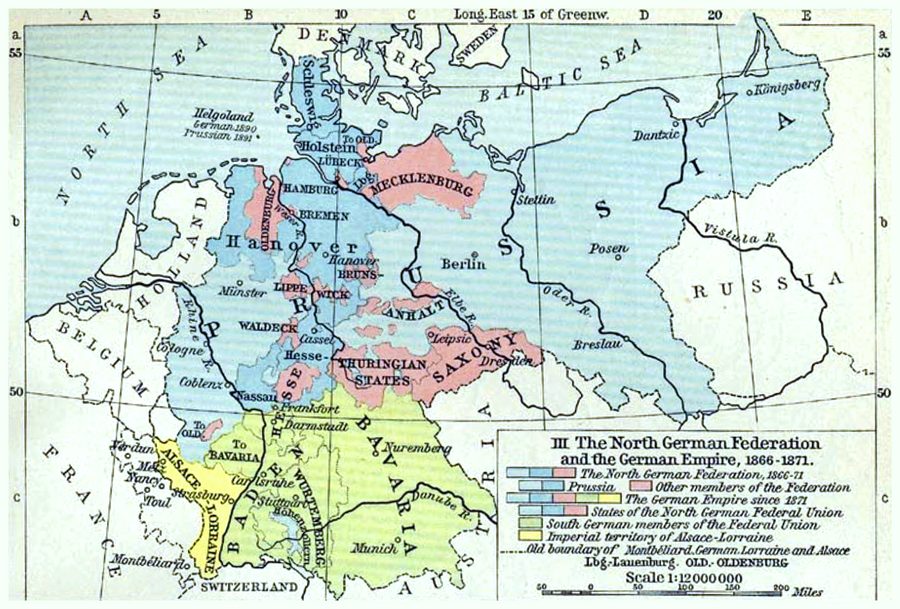
Many families know the ship. Few know the village. The way between the two runs through the parish books, one page at a time.
Sheet I · modern borders for orientation, rivers and hills drawn by hand. The marked village stands for yours.
It doesn’t have to stop at “Germany.”
12Step 2 of 2 · founding clients
Ask for a free case review
Send us your brick wall. We read your answers and reply personally within 3 working days: how realistic your case is, what we would do first, and a fixed price for it.
We are fully booked at the moment. You can still send your request: it keeps its place in the queue, and you get a personal reply in a few weeks.
We are taking on a small group of founding clients. They get:
The Village Check for $195 instead of $249
Direct contact with us throughout
No payment until you accept an offer
In return we ask founding clients for honest feedback, which we may quote with their OK, and permission to share their case anonymously as an example. The case review is free and commits you to nothing.
Thank you – your request has arrived.
We’ll reply personally within 3 working days to the e-mail address you gave. In the meantime: gather whatever papers you have, and if older relatives are still alive, ask them about names and places now. You can send us photos of your papers simply by replying to our e-mail.